


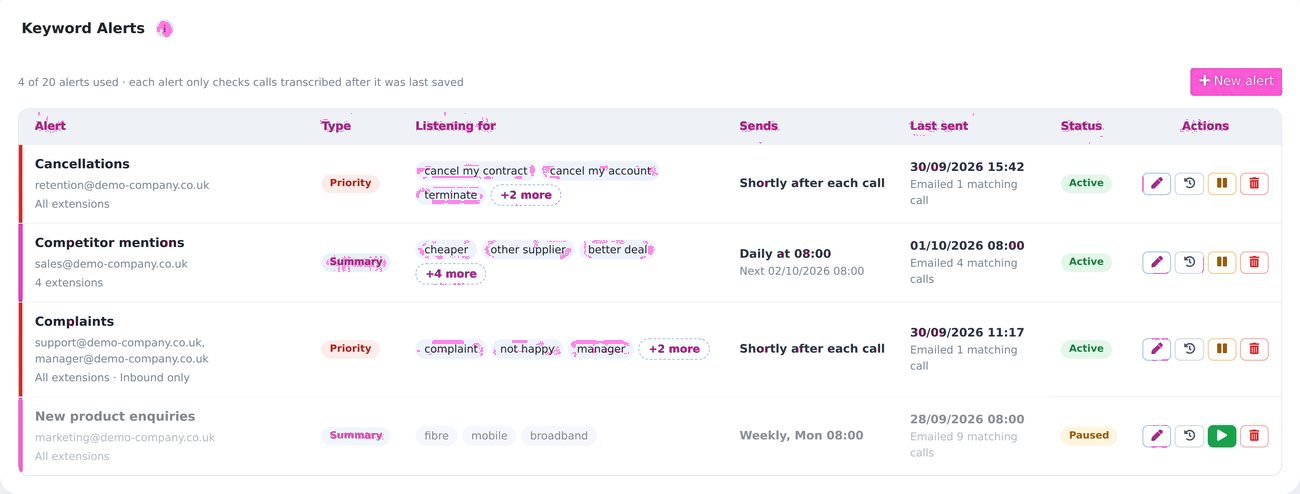
Every call written down, the important ones flagged.
From the recording to the alert in your inbox: this is the sequence the platform runs on every call.
Why listening beats every survey
You can ask customers how calls went, or you can hear it: the greeting rushed at 9am, the price explained brilliantly, the objection nobody knows how to answer. Silent monitoring gives managers ground truth — which is why it's the first tool in the quality family: monitor to understand, whisper to coach mid-call, barge to rescue. Ten minutes of listening a week tells a manager more than a month of reports, and it finds the fixable patterns fast: everyone struggling with the same question means the answer belongs in training, the website FAQ, and the IVR.
Running it right
Transparency first: staff know monitoring exists and its purpose is development — that framing is the difference between a coaching culture and a trust problem. Then structure: a simple scorecard (greeting, listening, resolution, close), a rhythm (two calls per person per fortnight beats a blitz per quarter), and praise in the mix — monitored calls should produce more 'that was excellent' than corrections or the tool is being misused. Supervisor-permissioned on our systems, per team, with recording as the library behind it.
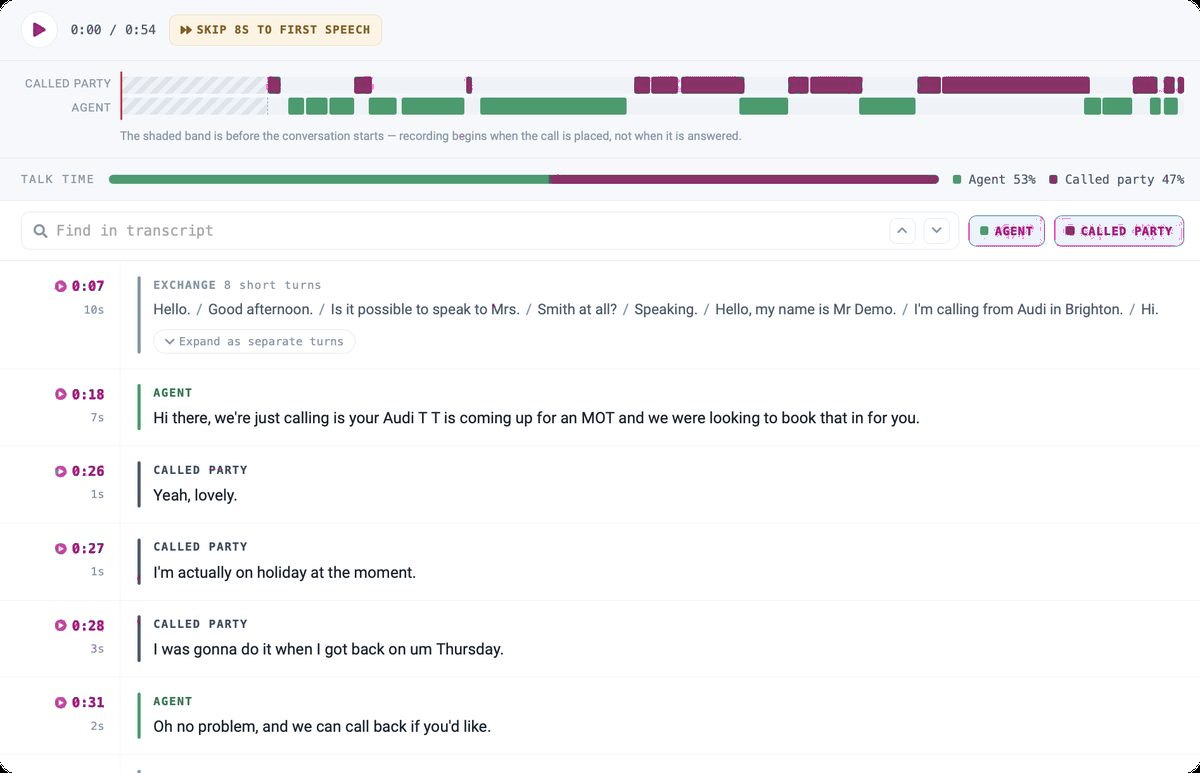
Every call, written down.
- Transcript, summary and keywords on every recorded call
- Alerts emailed when a caller mentions a complaint, a cancellation or a competitor
- Search every conversation by name, number or word
Related: Business Phone Systems (pillar) · All features · Buyer's guide · Get a quote
Every call, written down.
Frequently asked questions
Is monitoring staff calls legal in the UK?
Yes, for legitimate business quality purposes with staff awareness — standard practice done openly. We'll share sensible policy wording.
Can we monitor remote workers' calls too?
Yes — cloud systems monitor by extension, not location. Hybrid teams get identical coaching.
How is this different from recording?
Recording is the archive; monitoring is live. Recording answers 'what happened'; monitoring builds the team that makes better things happen.