Care home phone systems: built for the switch-off, the night shift and the family who rings at 9pm.
A care home’s phones carry GP calls, 999 calls, families, agencies and often the lift line, the fire panel and the telecare dialler too. Openreach withdraws the analogue network on 31 January 2027, and Ofcom’s minimum for emergency calls in a power cut is one hour. This page sets out what the regulators expect and how Telexico builds a home’s system so it does not depend on a line that is about to go.


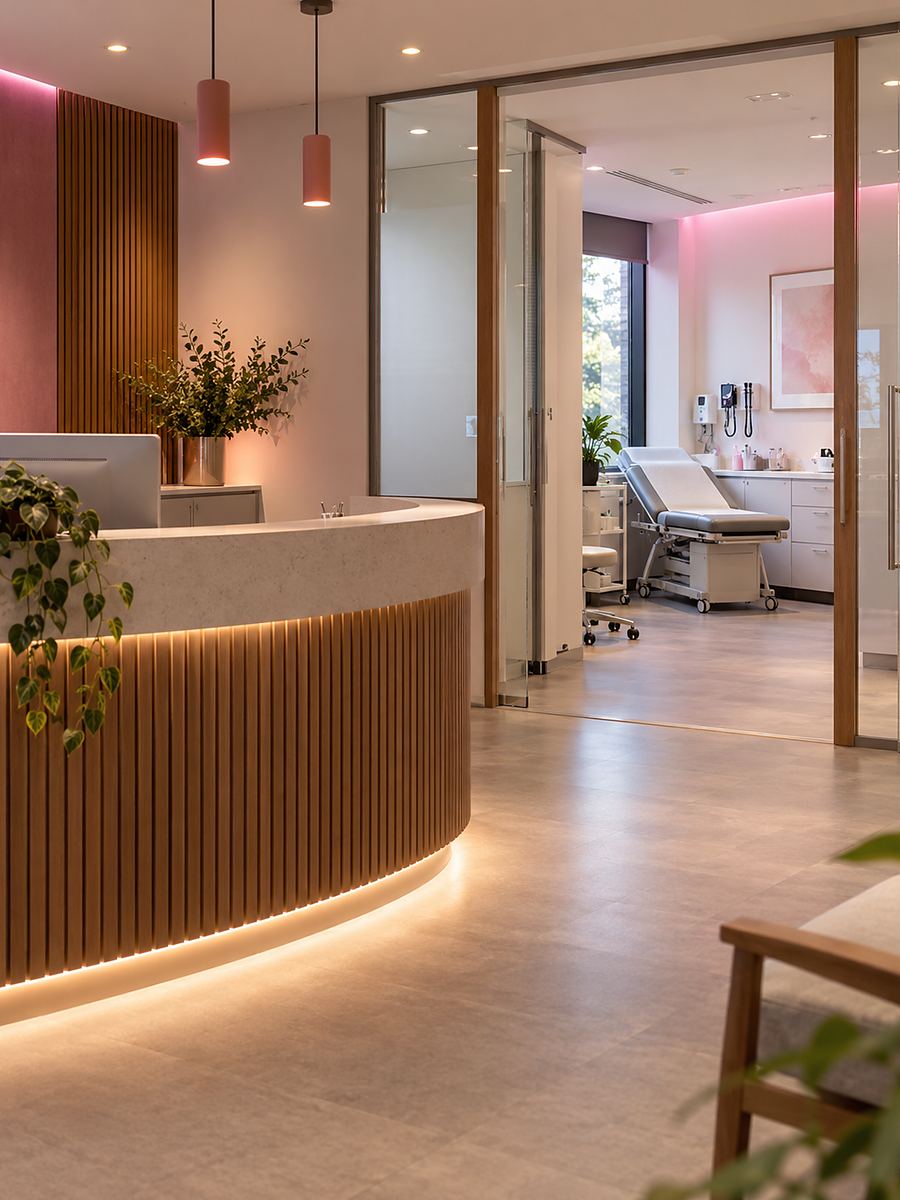
From the first ring to the recording.
The same cloud phone system routes every call the way your business works, then keeps a record of it.
What the phones carry in care homes now.
GOV.UK’s guidance on the move from analogue to digital lines lists the devices a care home is likely to have on them: alarms, telecare, lifts, intercoms, payment terminals and the phones themselves. Openreach stopped selling the old products in September 2023, closes its exceptions process on 30 October 2026 and withdraws the lines on 31 January 2027; from February 2027 only a temporary, dearer emergency voice product remains. In September 2026 roughly 350,000 business premises had still not moved.
The regulators have been specific about who must be protected. Ofcom’s guidance on General Condition A3 requires providers to give customers who rely on a line a way to call the emergency services for at least an hour in a power cut, free of charge where the customer is at risk. The industry’s PSTN Charter, signed by twelve providers including BT, Virgin Media O2, Sky, TalkTalk and Vodafone, commits to battery back-up beyond that minimum, to no non-voluntary migrations until vulnerable people are protected, and to migrating no telecare user without a confirmed working telecare solution. The Telecare National Action Plan (DHSC and DSIT, February 2025) says plainly that the switchover “will impact telecare within social care settings”. A home that runs its own migration can design for more than the minimum, and the sector is busy: Skills for Care put the 2024/25 vacancy rate at 7% (111,000 vacant posts) and independent-sector turnover at 24.7%, while CQC reports care home occupancy up from 78% in 2021/22 to 84% in 2024/25.
Six things that decide whether a care home phone system works.
Each one is drawn from a published source listed at the foot of the page, dated. None is a guess.
The lines you forgot are the dangerous ones
Lift emergency phones, fire-panel diallers, telecare units and door entry often sit on analogue lines nobody has looked at in years. They stop working when the line is withdrawn, not when the phones are changed.
A power cut must not silence 999
Ofcom’s one-hour minimum is for the provider. A home with residents who cannot self-evacuate should be designing for hours, with battery back-up on the connection and a mobile route when the fibre is down.
Families ring in the evening
The home’s number is the family’s only route to a parent after visiting hours. An unanswered ring at 9pm becomes a complaint by the morning, and CQC expects complaints to be identified, recorded and acted on.
Clinical calls need to land first time
The Enhanced Health in Care Homes framework gives each home “a weekly home round supported by the care home MDT” and a named clinical lead. Those calls, plus pharmacy queries, hospital discharge calls and 111 clinicians, all ring the same number as the families and the agencies.
The night shift is small and mobile
Two or three staff across several floors cannot be at a desk phone, and with a 7% vacancy rate and turnover near a quarter, the person answering is often new or from an agency. Cordless handsets with the home’s number, and a group that rings all of them, are the difference between answered and missed.
Records are a regulatory requirement
Regulation 16 requires “an accessible system for identifying, receiving, recording, handling and responding to complaints by service users and other persons”; Regulation 17 requires accurate, complete and contemporaneous records, including records relating to the management of the service. Four in five providers now run digital social care records (80% in July 2025); the phone log should be as retrievable as the care record.
Every seat, fully loaded.
- Call recording, the Telexico Mobile App and Telexico Web UC included
- Handsets pre-provisioned and shipped ready to plug in
- Moves, adds and changes from the portal, no engineer visit
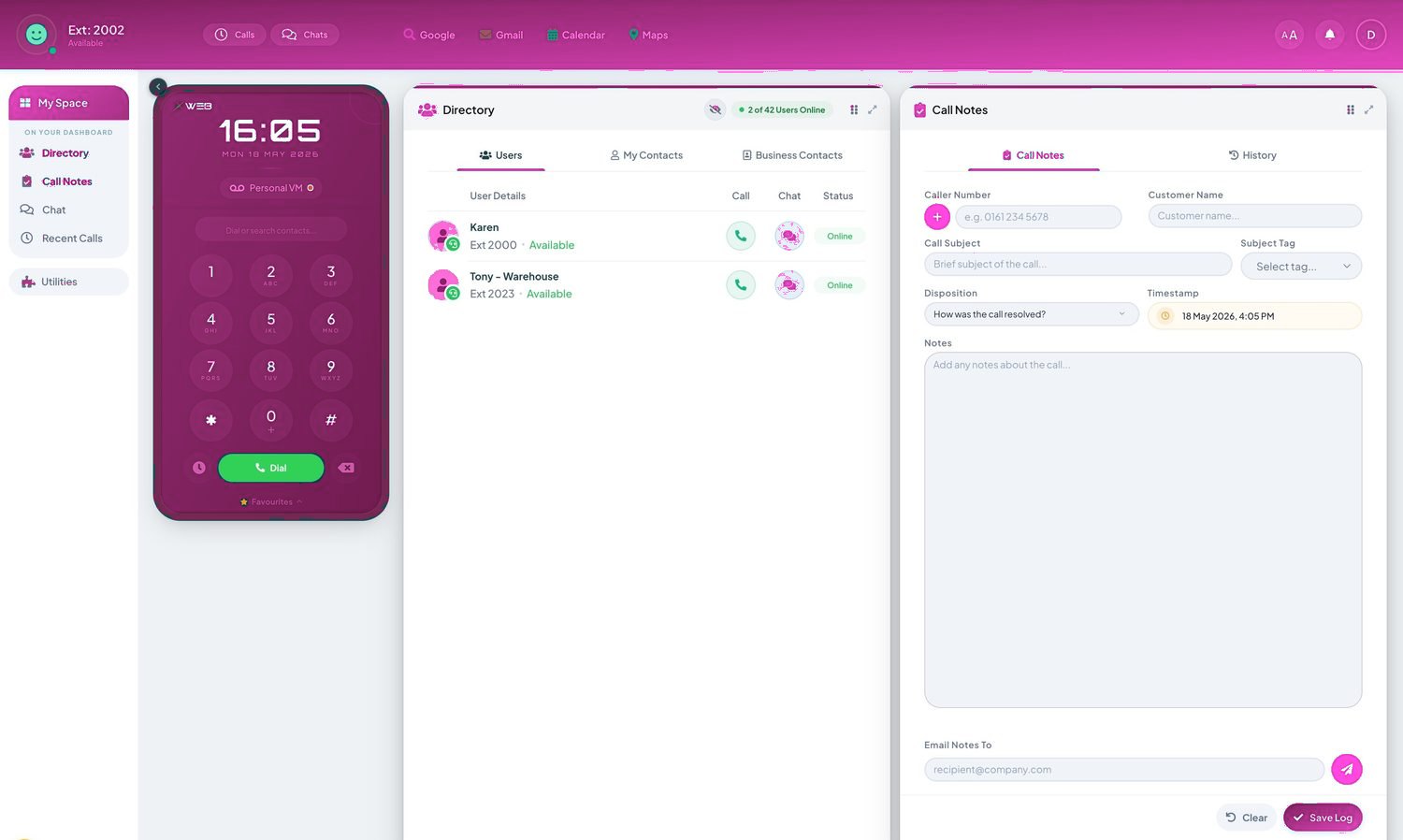
What the regulator expects of care homes, and what the phones have to do about it.
The left column is the obligation as published; the right column is how we configure the system to meet it. Read the source before relying on the summary.
| Requirement | Where it comes from | What the phone system must do |
|---|---|---|
| Emergency calls must work for at least one hour in a power cut where a line is relied on | Ofcom guidance on General Condition A3.2(b) | Battery back-up on the router and adapters sized for the home, 4G/5G failover, an emergency-call test on handover |
| Telecare, alarm, lift, intercom and payment devices on analogue lines must be migrated before withdrawal; telecare providers expected to share data, stop redeploying analogue devices and test regularly | GOV.UK guidance (May 2025); Telecare National Action Plan (Feb 2025); Openreach WLR withdrawal 31 Jan 2027 | A line-by-line audit of the building and a migration plan agreed with the lift, alarm and telecare suppliers |
| Battery back-up beyond the one-hour minimum; no telecare user migrated without a confirmed working solution; no non-voluntary migrations until vulnerable people are protected | PSTN Charter (GOV.UK, updated 22 Jan 2026) | We design the home to the Charter standard, not the minimum, and test the telecare dialler on the new line before the old one goes |
| An accessible system for identifying, receiving, recording, handling and responding to complaints by service users and other persons | Health and Social Care Act 2008 (Regulated Activities) Regulations 2014, regulation 16(2) | Family and complaints routes on the menu; calls recorded and tagged; voicemail to email |
| Accurate, complete and contemporaneous records for each service user, and records relating to the management of the regulated activity | Regulation 17(2)(c) and (d), good governance | Call logs with timestamps for every attempt, exportable for inspection |
| Risks assessed and mitigated; premises and equipment safe for their intended use; timely care planning with other providers | Regulation 12(2)(a), (b), (d), (e) and (i) | Lift and alarm lines treated as safety equipment in the migration; clinical calls prioritised in the menu; GP and 111 on speed dial on every handset |
| Tell callers calls are recorded, why and for how long | ICO right to be informed; Lawful Business Practice Regulations 2000 | Announcement and privacy wording agreed with the registered manager |
Swipe the table sideways on a phone.
The Telexico blueprint for care homes.
Hosted cloud calling with the Telexico Mobile App, Web UC and standard SIP handsets, configured for the way a care home actually runs.
Resilience in layers
Full fibre first, 4G/5G failover second, battery back-up on both, and a test of a 999 call from the home’s number with the mains off before we sign the job off.
Every analogue line found and migrated
Lift phone, fire panel, telecare dialler, door entry, the fax on the nurses’ station: each one is listed, its supplier contacted, and the migration done before 31 January 2027 rather than after.
Handsets on every floor
Cordless handsets across the building with the home’s number, a night group that rings all of them, and desk phones where the managers sit.
Family, clinical and agency routes
A menu that sends families to the floor, clinicians to the nurse in charge and agencies to the manager, with voicemail to email so nothing waits until the morning.
Resident lines handled separately
Residents who want their own phone get a line that only needs internal and local calling, on a cheaper licence than the office seats, with the home’s number kept for the home.
Records that satisfy an inspection
Recording announced, retained to the home’s policy, complaint tagging, and a call log that shows every attempt and answer by time.
A typical inherited set-up and a Telexico care home system.
| Moment | What usually happens | Telexico |
|---|---|---|
| Power cut at 2am | The analogue line keeps working until January 2027; after that, nothing | Fibre and 4G/5G on battery back-up; a 999 call tested with the mains off |
| Lift line and fire panel | On a line that is withdrawn on 31 January 2027 | Audited and migrated with the equipment suppliers before the date |
| A family calling at 9pm | Rings the office; nobody is there | Routes to the floor handsets, then to voicemail to email |
| GP calling on a Tuesday round | Busy tone | Clinical option rings the nurse in charge first |
| Night staff across three floors | A desk phone on the ground floor | Cordless handsets on every floor, one group |
| A complaint by phone | A note in the diary | Tagged, recorded, retained; the manager sees it the same day |
| A group of homes | A different system and bill per home | One system across the group, calls overflow to head office, one bill |
Swipe the table sideways on a phone.
How a care home day runs on the new system.
- 07:30Handover: the night log shows every call attempt and answer by time, including the family call at 23:40.
- 09:00The GP’s round call reaches the nurse in charge on the clinical option, first ring.
- 11:15A hospital discharge coordinator leaves a voicemail; it is in the manager’s email as text within a minute.
- 14:00The lift company tests the migrated emergency phone with the engineer on site.
- 17:45An agency confirms night cover on the agency route; the recording is on file.
- 21:05A daughter rings; the first-floor handset answers, and the call is logged.
- 02:10A power cut. The fibre router and 4G failover are on battery; the 999 call the staff make connects.
The calendar a care home phone plan is built around.
- 11 February 2025Telecare National Action Plan published by DHSC and DSIT
- 22 January 2026PSTN Charter updated; twelve signatories recommit to protections for vulnerable customers and telecare users
- 30 October 2026Openreach closes the exceptions process for remaining analogue lines
- 31 January 2027WLR and ISDN withdrawn nationally; telecare users’ protection period ends
- 1 February 2027Only a temporary emergency voice access product remains for lines not yet migrated
Care home phone systems by area.
Installed from Wolverhampton across the Midlands, and through UK partner engineers elsewhere. Each area page covers the local detail.
The services behind a care home system.
Everything for care homes
Broadband, WiFi, CCTV, SMS and AI for the sector in one place.
Business phone systems
Hosted cloud calling with the Telexico Mobile App, Web UC and desk phones.
AI receptionist
Answers, captures and books when the team cannot, with a transcript every time.
AI call intelligence
Every call transcribed, summarised and flagged for complaints and opportunities.
Business broadband and full fibre
The connection the phones depend on, with 4G/5G failover built in.
The PSTN switch-off
What the end of analogue and ISDN lines means for your building.
Useful next: AI Receptionist for Care Homes in Wolverhampton. Carers care. The AI answers · AI Receptionist for Care Homes answering when you can’t · AI Receptionist vs Traditional Receptionist · Business Phone Systems Birmingham · Business Phone Systems in Dudley · Business Phone Systems in Nottingham · Business Phone Systems in Telford · Business Phone Systems in Walsall · Business phone systems Wolverhampton. Engineered locally, supported in person · The report that changes how you staff the phones · Cloud PBX vs Hosted VoIP the real difference, explained · Healthcare Phone Systems 13 sectors, one expert provider · Business Phone Systems in Wolverhampton. Every option, one local team · VoIP vs ISDN
Businesses that run on Telexico.
A few of the companies we look after — across hospitality, healthcare, property and retail.









Every seat, fully loaded.
Phone systems for care homes: your questions.
Will our telecare and lift lines still work after January 2027?
Not on analogue lines. Each device needs either a digital-ready replacement from its supplier or a tested adapter on a resilient connection. We audit every line in the home and agree the plan with the lift, alarm and telecare companies before anything is switched.
How long will the phones work in a power cut?
That depends on the batteries we fit, which we size for the home. Ofcom’s minimum is one hour where a line is relied on; we design to the PSTN Charter principle of going beyond it, and we test a 999 call with the mains off at handover.
Can residents have their own phones?
Yes. Resident lines run on cheaper licences that only need internal and local calling, separate from the office seats, so a resident’s phone never ties up the home’s number.
How do night staff answer across floors?
Cordless handsets carry the home’s number on every floor, and a night group rings all of them. Every attempt and answer is logged with a time, which is the record CQC expects under regulation 17.
Do we have to record calls?
No. Homes often choose to for complaints and safeguarding records. Recording is lawful under the Lawful Business Practice Regulations 2000 when callers are told, and the privacy wording is agreed with the registered manager.
What does it cost?
One per-user price per month quoted in writing, with UK calls, set-up and number porting included, rolling 30-day terms available or 12 months with handsets included, and no mid-contract price rises. The migration audit is part of the review.
Built the same way: the rules, the pressures, the blueprint.
Where the care home facts come from.
Checked on 7 October 2026. Regulations and figures change; read the current version of each document before relying on the summary above.
- CQC: Regulation 16, receiving and acting on complaints
- Health and Social Care Act 2008 (Regulated Activities) Regulations 2014, regulation 17
- CQC: regulations for service providers and managers (Regulation 12 and index)
- CQC: State of Care 2024/25, adult social care
- Skills for Care: the state of the adult social care sector and workforce in England, 2025
- DHSC: findings from the 2025 adult social care provider technology survey (6 Mar 2026)
- DHSC and DSIT: Telecare National Action Plan (11 Feb 2025)
- GOV.UK: Public Switched Telephone Network Charter (updated 22 Jan 2026)
- Ofcom: protecting customers during the migration to digital landlines
- Ofcom: BT compliance assurances for certain migration-to-IP processes (14 Sep 2026)
- NHS England: providing proactive care for people living in care homes, Enhanced Health in Care Homes framework
- ICO: what privacy information should we provide?
- Telecommunications (Lawful Business Practice) (Interception of Communications) Regulations 2000, reg 3
- GOV.UK: Moving landlines to digital technologies (28 May 2025)
- Openreach: updated WLR commitments, published by Ofcom (19 Dec 2025)
- ISPreview: Openreach confirms post-January 2027 measures (24 Sep 2026)
- Ofcom: guidance on General Condition A3.2(b), power cuts and emergency calls (10 Oct 2018)