Small office ISDN to VoIP — the typical project shape.
What a Telexico small office ISDN-to-VoIP migration actually involves. Illustrative of pre-PSTN switch-off migrations for UK SMEs — typical 5-25 user offices preparing for the January 2027 deadline.


Audit first. New service in. Old lines off last.
We carefully plan and coordinate your migration to minimise disruption. Where technically possible, we can prepare and test your new phone system alongside your existing service before the final cutover. Any expected interruption or contingency requirements will be discussed in advance. Openreach has set 31 January 2027 as the closure date for the PSTN; Stop Sell has applied since September 2023.
PSTN switch-off forces every UK business to migrate by 2027
BT switches off ISDN and copper PSTN by January 2027 — every UK business still on copper has to migrate before then. The typical small office we migrate is on a 5-15 user ISDN setup, sometimes with a legacy PBX, hunt groups, DDI ranges, after-hours diversion. The migration isn't optional and the deadline isn't moving.
ISDN switch-off deadline is real
January 2027 hard deadline; many UK exchanges switching off earlier. Office on ISDN today has to migrate; the only question is when and how.
Existing phone numbers carry years of equity
Office numbers on business cards, stationery, websites, Google listings. Customers know the number. Worry about losing it stops many businesses from starting the migration.
Worry about downtime during cutover
Mid-day phone outages aren't acceptable. Existing PBX needs to keep running until the new system is ready. Migration risk perceived as high.
Legacy PBX with custom routing
Older offices often have PBX with hunt groups, DDIs, custom voicemail rules, after-hours diversion — all needs replicating on the new hosted VoIP. Done wrong, calls get lost.
Off copper before the deadline, not at it.
- A readiness audit that lists every line and what it carries
- The new connection in and tested before anything is switched
- Your numbers ported, the old lines ceased last
How Telexico designs ISDN-to-VoIP migrations
Migration is a project, not a transaction. Standard approach: discovery (existing setup documented in detail — lines, DDIs, hunt groups, voicemail rules, diversion logic), design (new hosted VoIP tenant designed to replicate or improve existing routing; new IP handsets specified), order placement (number porting initiated with BT, hosted VoIP tenant configured, IP handsets shipped), parallel running (new VoIP live on temporary numbers, staff trained, old ISDN still active), cutover (out-of-hours number port, old ISDN ceased, new system takes over), post-cutover monitoring (engineer on standby, teething issues resolved). Designed around minimising operational risk.
How the deployment ran.
Standard small-office migration: 4-8 weeks elapsed from kick-off to live. Project-managed with one Telexico PM owning the rollout from discovery to post-cutover handover.
Week 1-2 — Discovery and design
Existing setup documented: lines, DDIs, hunt groups, voicemail rules, diversion logic, hardware. New hosted VoIP tenant designed; IP handsets specified; routing replicated or improved.
Week 2-4 — Number porting and pre-config
Number porting initiated with BT (2-4 weeks lead). Hosted VoIP tenant configured at Telexico; IP handsets pre-configured; integration with CRM/AI receptionist planned.
Week 4-6 — Parallel running and cutover
New hosted VoIP live on temporary numbers; staff trained; old ISDN still active. Out-of-hours number port; old ISDN ceased; new system takes over. Engineer on standby post-cutover.
What changes for the office after migration
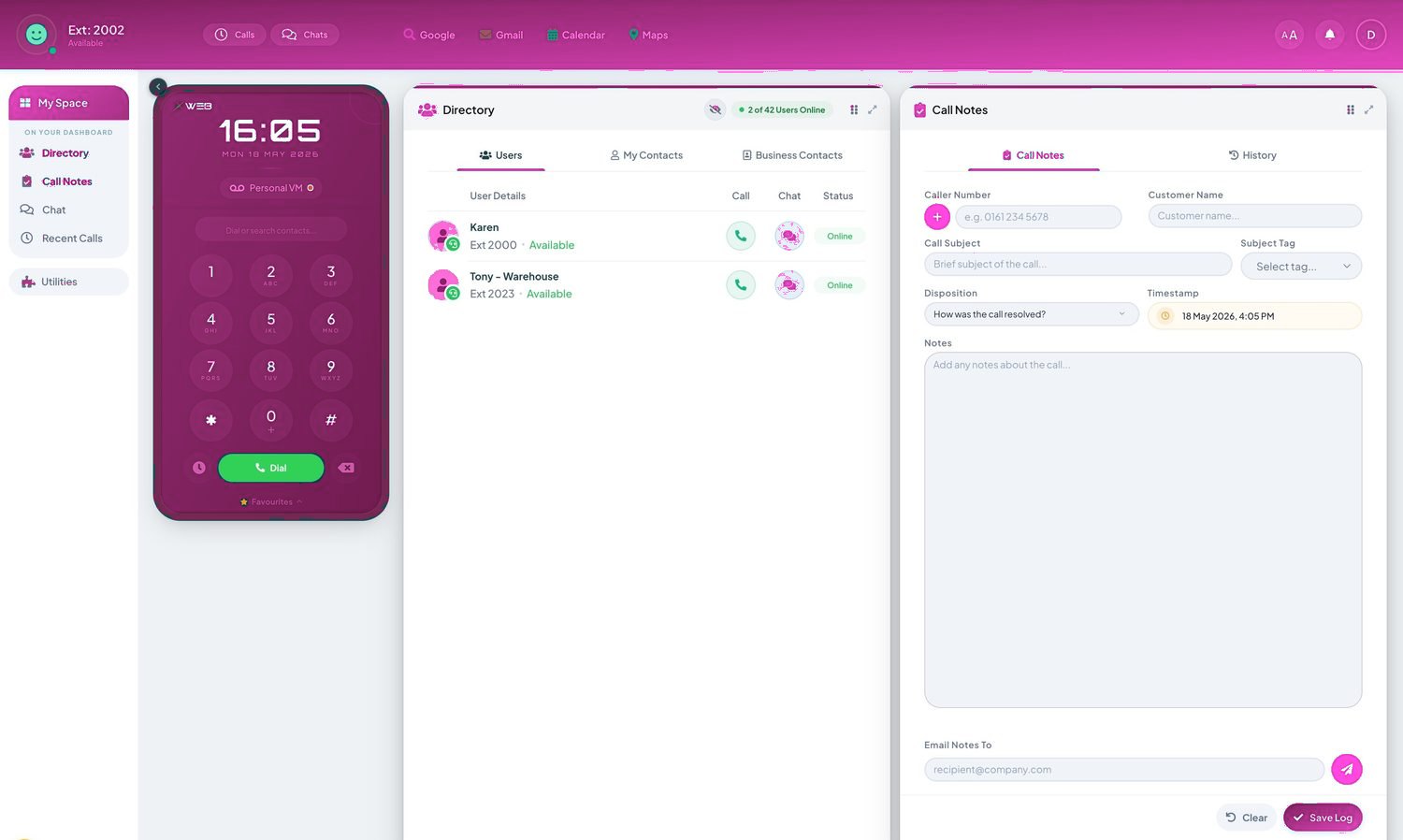
The immediate change is feature uplift: mobile and desktop apps, call recording, hunt groups, voicemail-to-email, CRM integration. The strategic change is PSTN switch-off readiness — the office is no longer on the doomed copper infrastructure. The cost change is typically a monthly reduction vs the old ISDN bill.
Mobile and desktop apps for hybrid working
Staff take office calls from anywhere — mobile, laptop, home office. Hybrid working properly supported; office number rings on mobile when out.
Modern features as standard
Call recording, hunt groups, voicemail-to-email, hot-desking, IVR — all features that legacy ISDN setups typically didn't have, now standard in modern hosted VoIP.
Monthly cost typically reduces
Hosted VoIP at £8-15 per user per month plus modern broadband often costs less than legacy ISDN plus PBX maintenance plus traditional broadband. Migration usually pays for itself in months.
The technical configuration
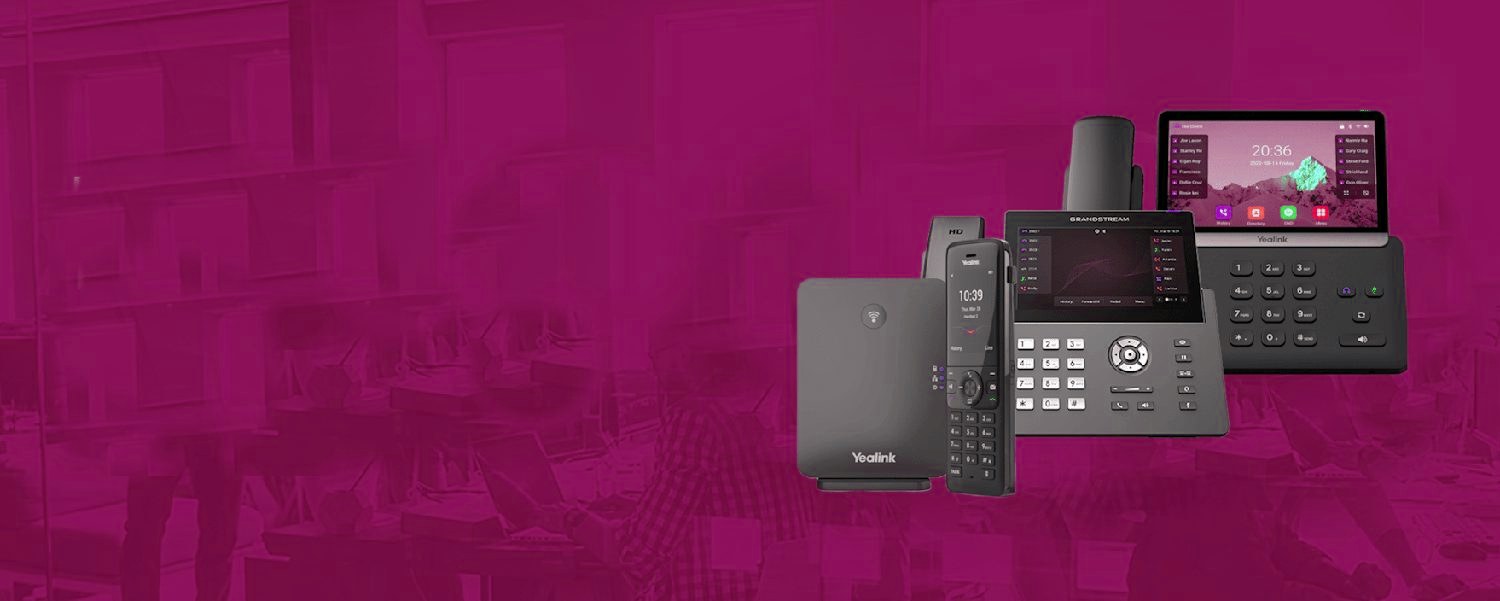
Standard small-office migration stack: number porting from BT to Telexico SIP trunk; hosted VoIP tenant with feature parity to legacy PBX (hunt groups, DDIs, IVR, voicemail-to-email); Yealink T-series IP handsets typically (T31P entry, T46U premium); mobile and desktop apps; integration with Microsoft 365 or Google Workspace for calendar; optional AI receptionist for overflow and after-hours. Project fee typically £200-800 plus ongoing £8-15 per user per month.
What you actually get from Telexico.
Honest about scope. No aggressive sales tactics, no surprise renewal jumps, no tier-1 call-centre triage. Real UK engineers, transparent pricing, one provider relationship across the stack.
UK-based provider
Wolverhampton-headquartered. Engineers cover the West Midlands daily; UK-wide install via our partner network. Real UK engineer support, UK data residency, UK contractual relationship — not US-routed SaaS.
Real engineer support
When you call Telexico, you reach someone who can actually fix things. Response SLA backed by real engineering capacity rather than call-centre headcount. Named account manager for ongoing customers.
Free infrastructure review
Every engagement starts with a no-obligation audit of your current setup. Honest recommendation — sometimes that's "stay with your current provider after negotiation." We'd rather be honest than oversell.
Transparent pricing
What you sign for is what you pay — including renewal. No teaser pricing that jumps 30-100% at year two. No mid-contract CPI shock. Predictable multi-year cost from day one.
One provider, one platform
Broadband, hosted VoIP, business WiFi, AI Receptionist, 4G/5G failover, CCTV consolidated onto one Telexico relationship. Single bill, single support number, single engineer when something needs attention.
Migration project-managed
Switching to Telexico isn't DIY. We handle contract audit, notice timing, ordering, parallel running, cutover, old-provider close-out. Customer-visible disruption typically measured in minutes.
Want a similar review for your business?
Tell us what you have now and what's frustrating you. We'll come back with a tailored review of where we can simplify, consolidate or improve it — no fixed-package pressure, no hard sell.
You may also want to read
Restaurant connectivity upgrade
What a Telexico restaurant connectivity upgrade actually involves — from initial site survey through cutover to ongoing...
Hotel guest wifi installation
What a Telexico hotel guest wifi project actually involves. Illustrative of independent hotel deployments across the UK...
Warehouse network upgrade
What a Telexico warehouse network project actually involves. Illustrative of UK light-industrial deployments —...
What is Starlink for business
Starlink Business is SpaceX's commercial-grade satellite internet service for businesses. It uses a constellation of...
Leased line vs full fibre
Full fibre (FTTP) and leased lines are both fibre-optic business connectivity, but they're fundamentally different...
Free infrastructure review
Send us your current setup. We'll review what you have, what you pay, and where we can simplify.
31 January 2027. Ready long before it.
The switch-off, nationally and near you.
One readiness audit, wherever the lines are. The national guide explains the change; the local pages cover the exchanges and the businesses around you.
National guides
Local switch-off pages
Frequently asked questions
When does ISDN actually get switched off?
January 2027 full switch-off deadline. Many UK exchanges are switching off earlier — check your specific exchange's date. The deadline isn't moving; waiting until late 2026 means panic migration with limited install capacity available.
Can I keep my existing office phone numbers?
Yes — number porting is standard and clean. All UK landline numbers transfer to the hosted VoIP platform without changing what customers dial. No stationery, website, Google listing changes needed. Porting typically 2-4 weeks lead time.
How much downtime is there during cutover?
Typically a few minutes — sometimes seconds — during the actual cutover. Often customer-invisible. Scheduled out-of-hours. Old ISDN stays live until the cutover moment; new system takes over within minutes.
What about my existing PBX hardware?
Usually decommissioned post-migration — hosted VoIP doesn't need an on-premises PBX. Old IP phones from previous VoIP setups can sometimes be re-used; older ISDN handsets typically don't work with hosted VoIP and get replaced with new IP phones.
Will staff need training on the new system?
Yes but minimal — modern hosted VoIP is intuitive. Basic features (make/receive calls, transfers, hold, voicemail) covered in 30-60 minutes per user. Advanced features (call recording playback, hunt group admin) covered for designated admins. Telexico engineer attends install to handle this.
Does the migration disrupt the business significantly?
Done properly — minimally. Parallel running keeps old system live until cutover; cutover scheduled out-of-hours; post-cutover monitoring catches teething issues quickly. Most UK offices we migrate don't experience meaningful operational disruption.
How much does ISDN-to-VoIP migration typically cost?
Indicative small office (5-15 users): project fee £200-800 for the migration work; IP handsets £80-200 each; ongoing hosted VoIP £8-15 per user per month; broadband if bundled £40-100/month. Often the all-in monthly cost is lower than the existing ISDN setup. Real quotes against your specific size.
Want a similar review for your business?
This is the typical project shape Telexico runs. Send us your current setup and what's frustrating you — we'll review what you have today and tailor a project that fits. No hard sell, no fixed-package pressure.