

Fibre to the building, managed to the desk.
Full fibre (FTTP) runs fibre all the way into your premises over the Openreach or CityFibre network. Telexico supplies the managed router, checks what each carrier can deliver at your postcode and keeps it monitored.
Need the same speed up as down, guaranteed? That is a dedicated leased line, on the next page of the range.
First, find out which problem you actually have
'Slow internet' is three different problems wearing one coat. The line itself is slow — you're on copper-era FTTC in a full-fibre world, or a consumer product shared with the whole street at 5pm. The line is fine but the WiFi is dreadful — an ISP router in a cupboard trying to cover a building it was never designed for (this is the most common one, and upgrading the broadband won't fix it). Or the line is oversubscribed — twenty staff, cloud everything, and a connection sized for browsing. A two-minute speed test at the router versus over WiFi tells you which world you're in — and it's the first thing we check on any review, because selling you faster broadband when your WiFi is the problem would be taking your money for nothing.
The fixes, in honest order of likelihood
If the router-level speed is fine but rooms are slow: it's WiFi design, not broadband — access points where the survey says, not a stronger router. If the line itself is the ceiling: full fibre has probably arrived at your postcode since you last checked, and business FTTP typically costs less than people expect. If you've genuinely outgrown broadband — heavy cloud use, many staff, uploads that matter — a leased line gives you dedicated, guaranteed speed both ways. And if the problem is intermittent rather than slow, that's a different page: internet that keeps dropping.
Built to stay up.
- Full fibre, SoGEA or a leased line, chosen from the survey
- Automatic 4G/5G failover available on every business set-up
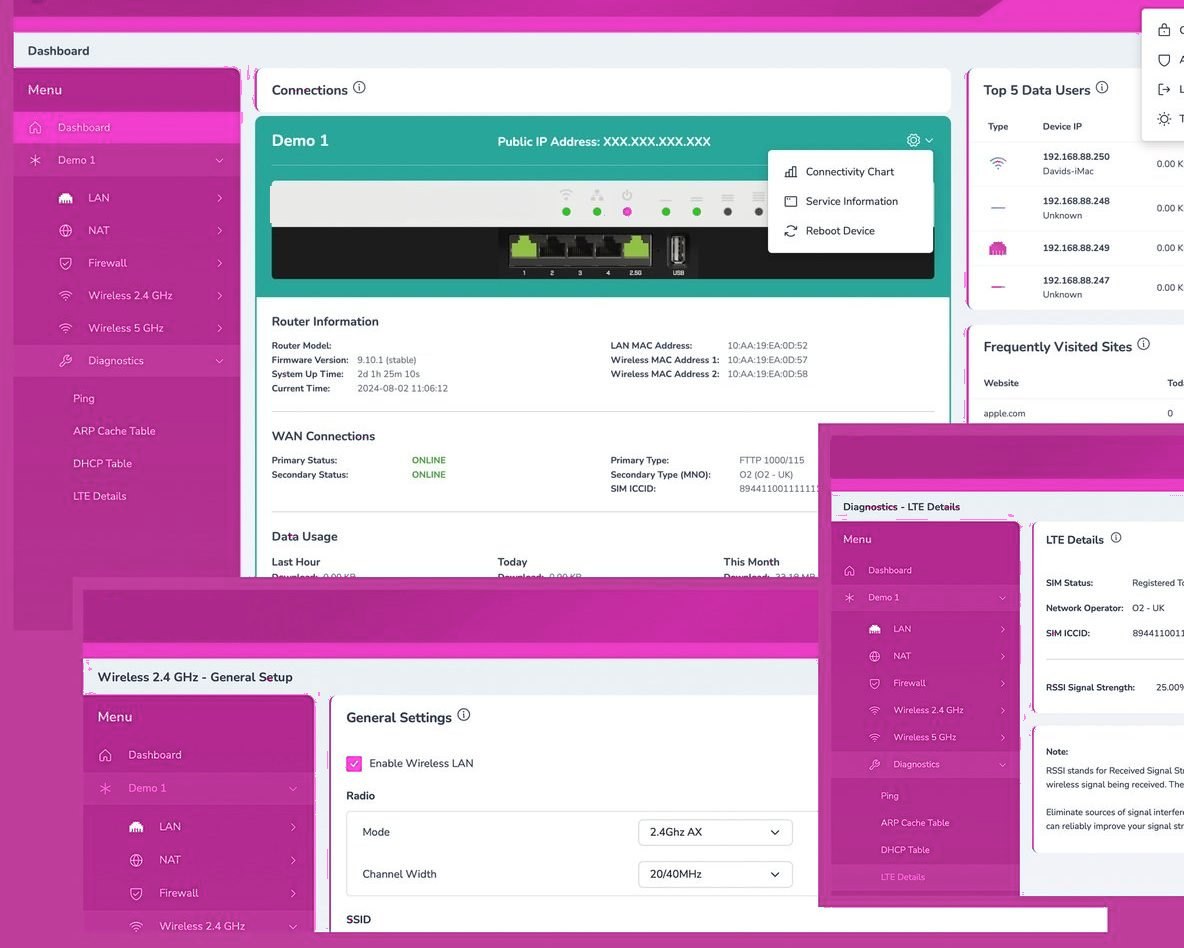
- Monitored from the Telexico portal, supported by a named UK engineer
Fibre that stays up.
Frequently asked questions
How do I know if it's the broadband or the WiFi?
Run a speed test plugged into the router by cable, then the same test over WiFi where staff sit. A big gap means WiFi design is your problem; matching slow numbers mean the line itself. We do this diagnosis free.
Will full fibre definitely be faster?
If you're on FTTC copper, dramatically — and availability has expanded hugely, so a postcode that had nothing two years ago often has full fibre today. We check your exact address before recommending anything.
When is a leased line worth it?
When the internet is genuinely production-critical: many staff in cloud systems, big uploads, VoIP at scale. It's dedicated bandwidth with an SLA — you stop sharing with the street.